Crate Training in Rhode Island
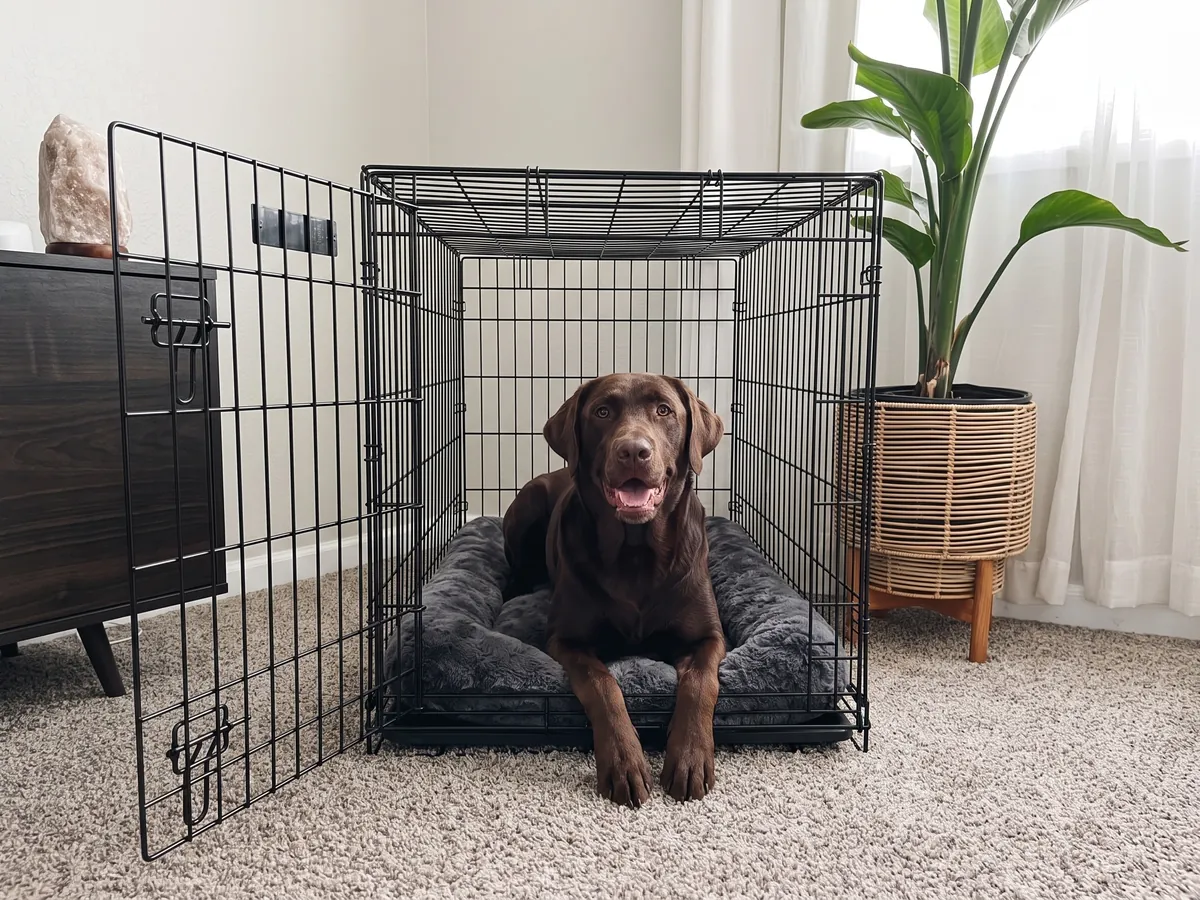
Our crate training in Rhode Island gives you a dog who walks into the crate on their own and settles.
- Quiet nights, no crying or barking
- Walks in on their own, no bribing
- Calm when you leave the house
- Easier potty training, fewer accidents
Click the button below and fill out a quick form to get started with a free consultation.
Check Out Our Reviews
A Crate Your Dog Actually Likes
Here’s what crate training in Rhode Island gives you and your dog once the routine clicks.
Quiet nights
Your dog sleeps through in the crate, and so does everyone else in the house. No more lying awake listening to the whining.
Walks in on cue
One word and your dog heads into the crate and lies down. No chasing, bribing or pushing at bedtime.
Peace of mind when you leave
Your dog rests calmly while you run errands, so you come home to a quiet house and nothing chewed.
A dog who can switch off
Young, high-energy and worried dogs finally get a clear answer to “what do I do now?” Lie down and relax.
Fewer accidents
A crate pairs naturally with a potty schedule, because most dogs avoid soiling the place where they rest.
Easier travel and vet visits
A dog who is at ease in a crate handles car rides, vet stays and time away from home with far less stress.
Crate Time Now vs. After Training
From puppies who scream at bedtime to adult dogs who chew their way out, these are the crate problems people bring to Bobby, and what replaces them.
Crate time right now
- Screams the moment the door shuts
- Won’t go near the crate at bedtime
- Chews the bars, the tray and the bedding
- Barks at 3 a.m. to get out
- Wrecks the house when left loose
- Too wound up to rest after a walk
- Bolts out the second the door opens
After crate training
- Settles quietly once the door closes
- Walks in on cue at bedtime
- Rests with the bedding in one piece
- Sleeps soundly until morning
- Calm in the crate while you’re out
- Switches off after exercise
- Waits politely until released
Crate Training in Rhode Island, Step by Step
Free Consultation
Bobby meets you and your dog, shares a few training tips you can use right away and designs a custom training plan built around your dog and your goals.
A calm first experience
Bobby introduces the crate at the pace your dog can handle, with clear structure and nothing forced. Your dog goes in, lies down and relaxes, starting with a few minutes and building from there.
Part of everyday life
Once your dog settles, the crate becomes part of the daily rhythm at bedtime, on quiet afternoons, during short errands and in the busy moments when guests come over.
Crate set up at home, then lifetime support
Bobby finishes at your house, picks the crate’s spot with you and walks the family through bedtime and departures. After that, you have support and guidance from Bobby for the life of your dog.
Where Crate Training Fits In
Crate training is part of every custom plan, and Bobby builds yours around your dog and your goals at your free consultation.
Board and train
Your dog lives and trains with Bobby, and the crate is part of every day’s structure, with rest after training, quiet nights and calm exits. Bobby handles pickup and drop-off at your door across Rhode Island and southern Massachusetts. Ideal for adult dogs, rescues and dogs who fight the crate.
Puppy board and train
Your puppy learns crate, potty and manners routines around the clock while staying with Bobby, then comes home ready to sleep through the night.
Puppy Foundations
For new puppy families who want to be hands-on, an extended foundation session sets up the crate, potty times and house rules, and follow-up lessons keep the routine working in real life.
In-home lessons near East Greenwich
Families near our East Greenwich base can do the crate work at home with Bobby coaching them through it. Mention your town on the call and Bobby will tell you if it’s close enough.
Even Dogs Who Hate the Crate
Many owners tell Bobby their dog will never go in a crate. In his experience, even dogs who have been written off as impossible usually learn to rest quietly in one, once the introduction is calm, clear and consistent.
Nothing is forced. Bobby watches the dog first and lets that decide the pace and how much structure to add. A worried rescue who spent too long shut in a crate somewhere else and a pushy teenager who treats the door as a challenge need very different starts, and both can end in the same place, lying down and relaxed with the door closed.
That’s Grey Standard Canine Training in practice. No single formula fits every dog, so the plan adjusts to the dog in front of him, never the other way around.
Why Trainers Recommend the Crate
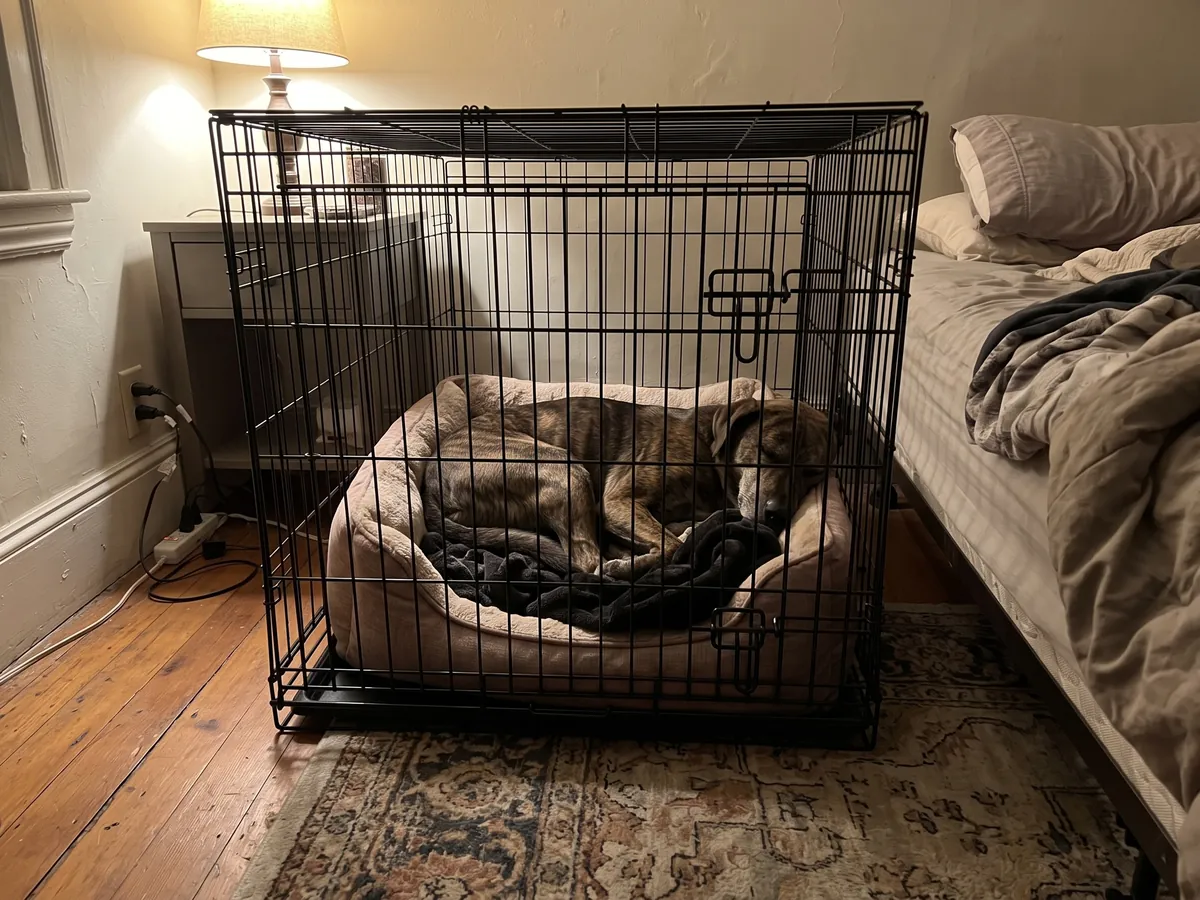
Some owners feel guilty about crating. Used as a time-out or a place to leave a dog all day, a crate can be unfair. Used the right way, it’s the opposite. It becomes a small, quiet space that belongs to your dog, where nobody bothers them and they can rest completely.
Many dogs naturally look for small, sheltered spots to sleep, under a desk or behind the couch. A crate gives that instinct a proper home, and a dog who can settle there tends to settle better everywhere else, too.
Beyond rest, a crate habit keeps a curious puppy away from cords, socks and cleaning products while you’re out, cuts down accidents during housebreaking and makes car rides, grooming and vet visits far easier.
A crate is a tool, not a lifestyle. Bobby builds a schedule that mixes crate time with potty breaks, exercise, training and time with the family, so the crate stays a place to rest rather than a place to wait.
Ready to end the bedtime battles? Click the button below and fill out a short form to get your free consultation. Bobby will hear about your dog’s crate struggles, share a few tips you can use tonight and build a custom plan for your home.
Bedtime Shouldn’t Feel Like a Battle
You close the crate door, turn off the light and the crying starts. You lie awake wondering whether to go back in, whether you’re being cruel, whether the neighbors can hear. By morning you’re exhausted, and your dog seems just as tired.
If that’s your house right now, you haven’t failed. Crate protest is one of the most common struggles in dog ownership, especially in the first weeks with a new puppy or a rescue. Your dog isn’t being spiteful. It simply doesn’t understand the crate yet.
Most crate trouble comes from a rushed start, a crate that only comes out when you leave, or opening the door because the crying got too loud. Those are easy mistakes to make, whether you’re in Warwick, Cranston or Wakefield, and they’re fixable with a clear plan.
Why Dogs Fight the Crate
Most crate protest comes down to three things. The first is simple. Your dog has never learned that the crate is a place to rest, so being shut in feels strange and the natural answer is to complain until someone opens the door. If someone does, that lesson sticks.
The second is energy. A puppy or young dog who hasn’t had enough exercise, or has had too much excitement, can’t settle anywhere, and the crate gets the blame. A walk, a potty break and a few calm minutes before bedtime change a lot.
The third is real distress. Some dogs aren’t protesting, they’re panicking about being left, with nonstop howling, drooling, soiling only when you’re gone or hurting themselves trying to get out. That’s a different problem that needs a different plan, so stop leaving your dog crated for long stretches and talk it through with Bobby at your free consultation.
Rule out the simple things too. A dog in pain, with a full bladder or an upset stomach will cry in the crate for good reason.
Good crate habits are part of everyday obedience, not a separate trick. A dog that rests calmly in a familiar, clean crate is usually easier to housebreak, calmer with visitors and more well-behaved overall, and the methods Bobby uses are built around trust, never fear.
When the Crate Becomes a Problem
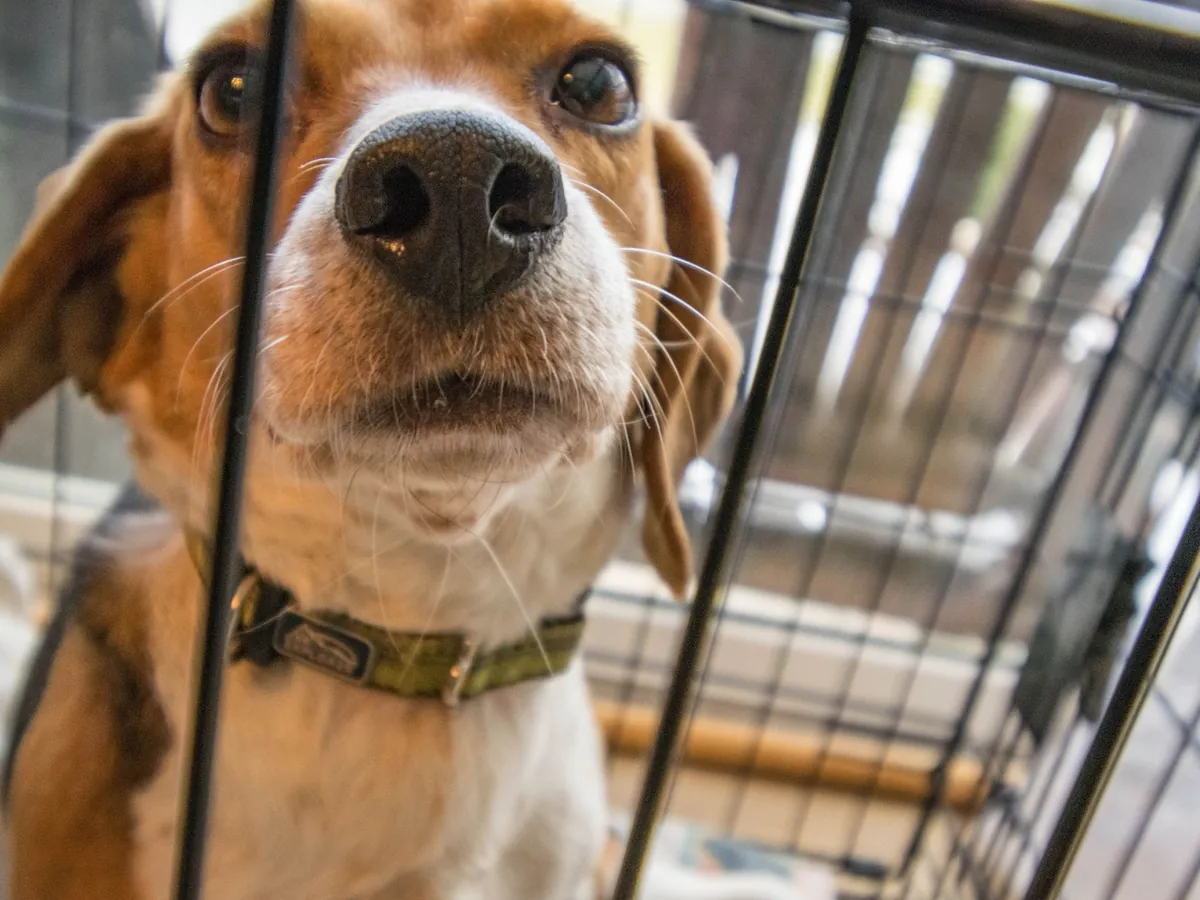
A few nights of protest are normal. These signs mean it’s time for a clear plan.
If this sounds like your dog, you’re in the right place. Bobby has helped hundreds of dogs with problems just like these. Click the button below and fill out a quick form to get started with a free consultation.
Crate Training Questions
Can my puppy start crate training with you right away?
Yes, ideally the day your puppy comes home. Young puppies usually adjust to a crate most easily, and starting early means bedtime, potty training and quiet time all share one routine from the beginning. Keep early stretches short, since young puppies need frequent potty breaks, and build from there. Puppy board and train and Puppy Foundations both set up the crate routine from the start.
Do you recommend crate training?
Yes, as long as it’s done right. A crate gives your dog a calm place to rest, supports house training and keeps them safe while you’re out. It’s never a punishment and never a place to leave a dog for most of the day, so Bobby introduces it gradually and positively, with plenty of exercise and family time outside the crate.
Can you crate train an older dog or a rescue?
Yes, it’s never too late. Adult dogs, seniors and rescues who have never seen a crate can learn to rest in one, and so can dogs who had a bad experience with one before. Older dogs sometimes need a slower start, but Bobby regularly gets dogs comfortable whose owners were sure they’d never accept a crate. Kennel training is simply another name for the same thing.
Can you help a dog who panics in the crate?
Yes. If the crying is intense or comes with drooling, panting or escape attempts, stop the crate practice for now and tell Bobby about it at your free consultation, because real panic needs a different plan than ordinary protest. If it’s plain protest and a potty break isn’t due, wait for a moment of quiet before you open the door, so calm is what gets your dog out, not noise.
How long does crate training take with you?
It depends on your dog and where you’re starting from. Once the introduction is calm, clear and consistent, many dogs settle in the crate quickly, including dogs their owners had written off. Crate work is built into your custom training plan alongside your other goals, so Bobby can tell you what to expect for your dog when you meet.
Will you help me decide where to put the crate?
Yes, that’s part of the session at your house. The best spot is usually somewhere your dog can rest but still feels part of the household, often a quiet corner of a room the family uses, away from drafts and direct sun. Bobby chooses it with you based on your home and your dog.
How much do you charge for crate training?
It varies with your dog, the situation and what you want your dog to do. Crate work is built into a program tailored to your goals, and a puppy who just needs a bedtime routine is a very different job from an adult dog who panics behind a closed door, so there’s no one flat rate. At your free consultation, Bobby learns about your dog, builds a custom training plan around your goals and gives you an exact quote, with no pressure to sign up.
Do you work with dogs in Providence, Newport and southern Massachusetts?
Yes. For board and train and puppy board and train, Bobby picks your dog up at home and returns them to your door anywhere in Rhode Island and southern Massachusetts, including Providence, North Kingstown, Newport and Bristol. We’re based in East Greenwich, and in-home lessons stay with families close by.
Explore Other Programs
Potty Training
A potty schedule your puppy or older dog actually follows, so the accidents stop and the rugs stay clean.
Puppy Training
House rules, routines and real-world manners from the first weeks, for a well-mannered puppy who listens and is easy to live with.
Dog Separation Anxiety Training
Howling, chewing or panic when you leave? A calm routine, crate comfort and goodbyes coached in your own home.
Get Started Today
Claim your free consultation for crate training in Rhode Island. Describe your dog’s crate struggles to Bobby, pick up a tip for tonight and get a custom training plan built around your goals.