Herding Dog Training in Rhode Island
Our herding dog training in Rhode Island teaches your herding breed to work livestock the right way.
- Works sheep with control, not chaos
- Stops and changes direction on cue
- Calm, safe handling around stock
- Obedient and settled at home too
Click the button below and fill out a quick form to get started with a free consultation.
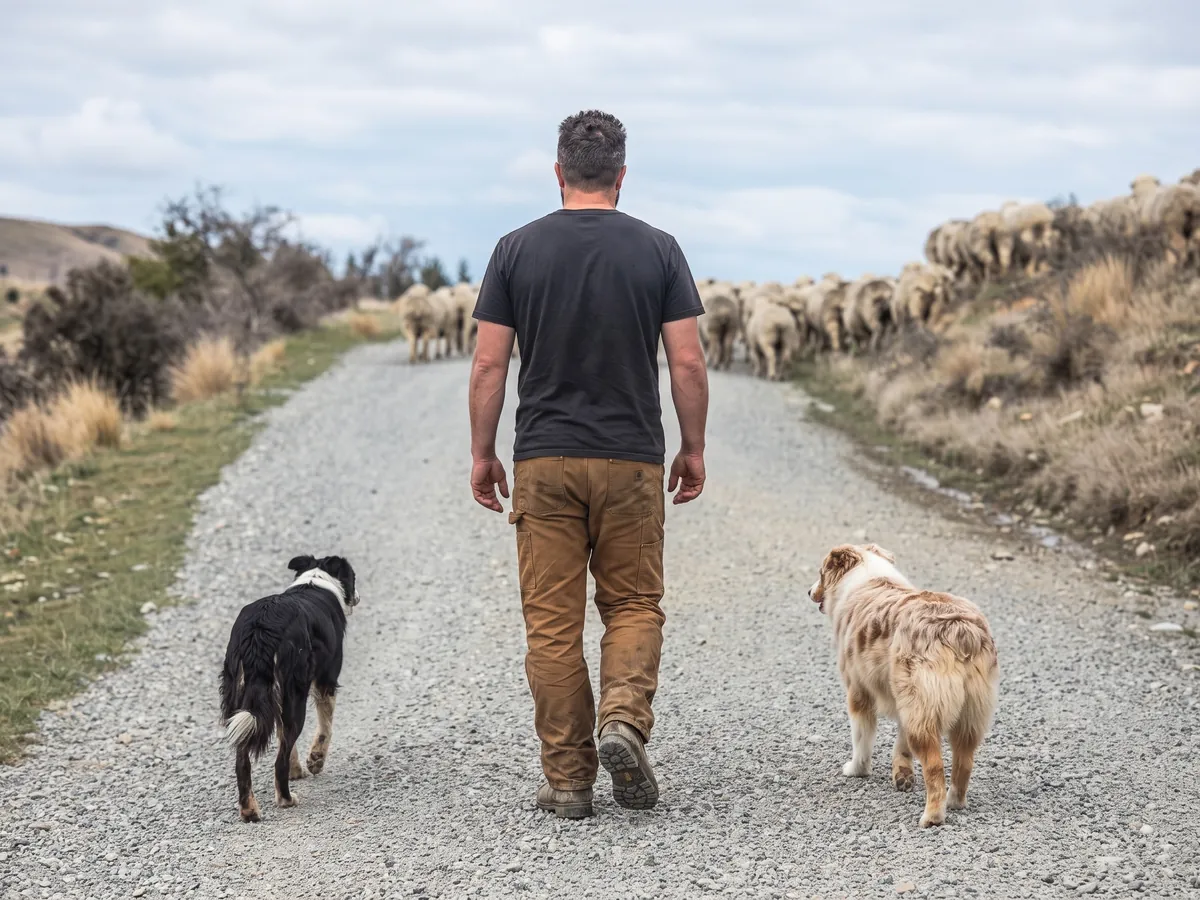
Check Out Our Reviews
What Herding Training Gives Your Dog
Your herding breed was built to work. Here’s what that looks like once the instinct has direction.
The job it was bred for
Herding gives your dog real work for its brain and body, so it comes home tired in the right way and settles for the evening.
A stop you can count on
Your dog drops into a lie down on cue, close or at a distance, even with the sheep moving, which is the most important skill in herding.
Direction on command
Your dog learns to circle the stock clockwise on come bye and counterclockwise on away to me, so you can place it where the work needs it.
Respect for the animals
Your dog learns to move livestock calmly and steadily, with distance and balance, instead of diving in, splitting the group or gripping.
A handler who knows the job
You learn where to stand, how to read pressure in the stock and when to step in, so you and your dog work as a team.
A calmer dog at home
With a real outlet for the drive, many dogs stop herding the kids, the cat and the cars, because the instinct finally has a place to go.
Herding Instinct, Before and After
Same dog, same instinct, plus direction, control and a handler your dog trusts.
Instinct with no direction
- Runs straight through the flock
- Won’t stop once the stock moves
- Grips or nips at the animals
- Circles too tight and too fast
- Ignores you once sheep appear
- Wound up for hours afterward
- Herds the kids, the cat and the cars
- You don’t know the commands
Instinct with training
- Gathers and brings the stock calmly
- Drops into a lie down on cue
- Moves livestock without gripping
- Wide, balanced flanks
- Listens to you around livestock
- Settles once the work is done
- Drive spent where it belongs
- You know how to handle your dog
Herding Dog Training, Step by Step
Free Consultation
Bobby meets you and your dog, shares a few training tips you can use right away and designs a custom training plan built around your dog and your goals.
An instinct check on livestock
Bobby introduces your dog to stock in a controlled setting, on a long line, and watches how it moves, how much natural instinct it shows and how it handles the pressure of the animals. That tells him where to start.
Foundations on stock
Your dog learns the basics of real herding work, like stopping on a lie down, flanking in both directions, walking up on the stock and leaving the work when you say that’ll do, along with the obedience that keeps it safe.
You on the handler side, then lifetime support
Bobby teaches you to read the stock and handle your own dog, so the work keeps going after the program. After that, you have support and guidance from Bobby for the life of your dog.
Ways to Start Herding Training
At your free consultation, Bobby builds your custom plan around your dog, its instinct and what you want to do with it.
Two-Week Board and Train
Your dog lives and trains with Bobby, with daily foundation work on livestock and the obedience that makes it safe. The most progress in the least time, with pickup and drop-off at your door.
Board and train + lessons on your land
For families with their own sheep, goats or ducks, a week with Bobby followed by lessons on your property with your own animals, so the skills carry over to your own animals.
Puppy Foundations
For a young herding pup, rules on the game of chasing, a recall and a reliable stop come first, so it is ready for stock when it is old enough.
What Herding Training Actually Is
Herding is the job of controlling the movement of livestock. A good herding dog gathers the animals, brings them to the handler, moves them where they need to go and holds them there, all while staying calm enough that the stock stays calm too.
The dog reads the stock and finds the balance point, the spot where the animals move toward the handler. The handler gives direction. Training is about joining the two, so your dog’s instinct and your commands work together instead of against each other.
Every dog starts on a long line in a small area with dog-broke sheep or ducks, animals used to being worked. As the stop, the flanks and the pace come together, the work moves to bigger spaces and longer outruns.
- Come bye, circle the stock clockwise
- Away to me, circle counterclockwise
- Lie down, stop and wait
- Walk up, move in toward the stock
- That’ll do, leave the work and come back
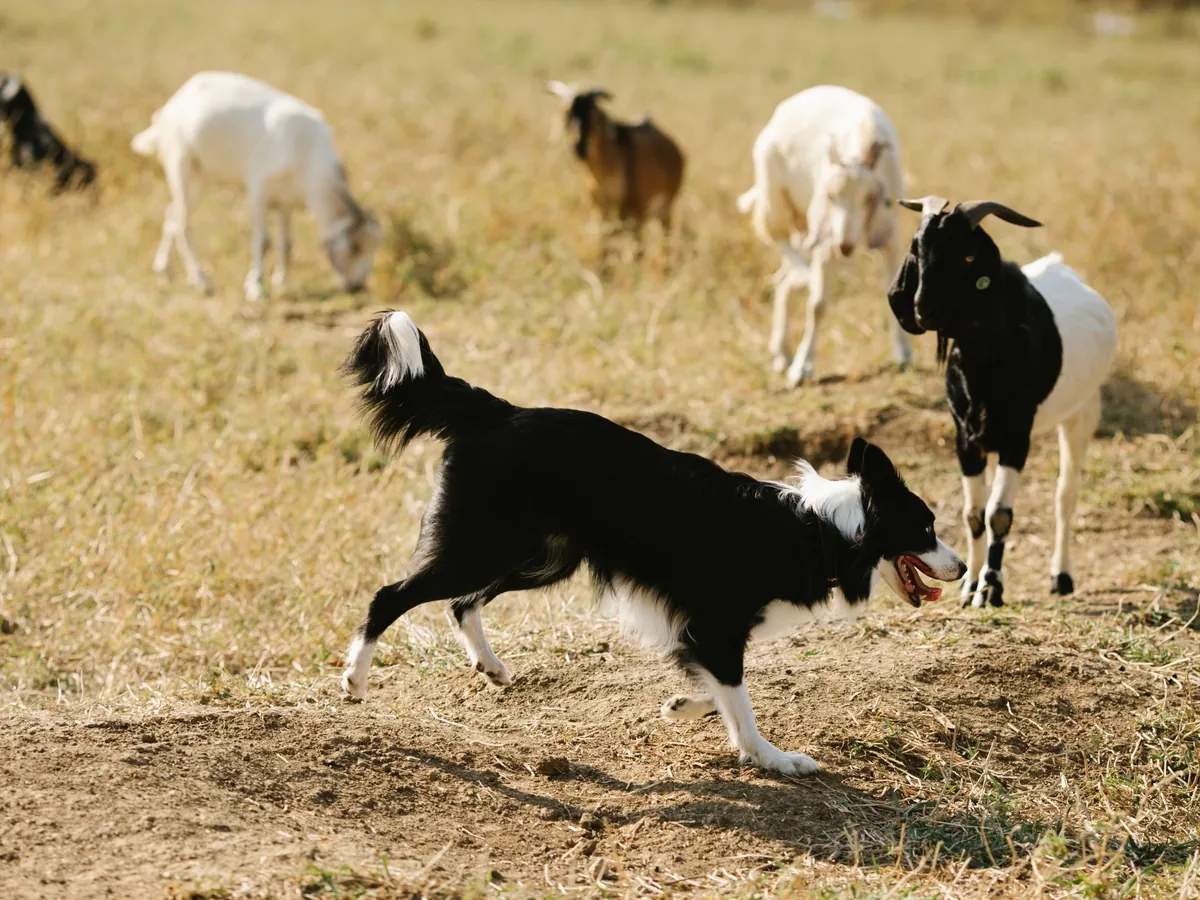
It Starts With an Instinct Check
Not every herding breed has the same amount of instinct, and you can’t know until your dog meets livestock. That’s why the first session is an instinct check. Bobby brings your dog to a few calm sheep on a long line and watches what it does.
A dog with instinct usually locks on, stays with the stock and starts to circle or try to gather it. Some dogs switch on in seconds, while others need a few sessions before the interest shows. Either way, Bobby tells you honestly what he sees and what is realistic for your dog.
Most dogs are ready to start at around six months to a year old, once they can handle the excitement. Younger puppies do the groundwork first, a reliable stop, a recall and rules around chasing, so their first time on stock goes well.
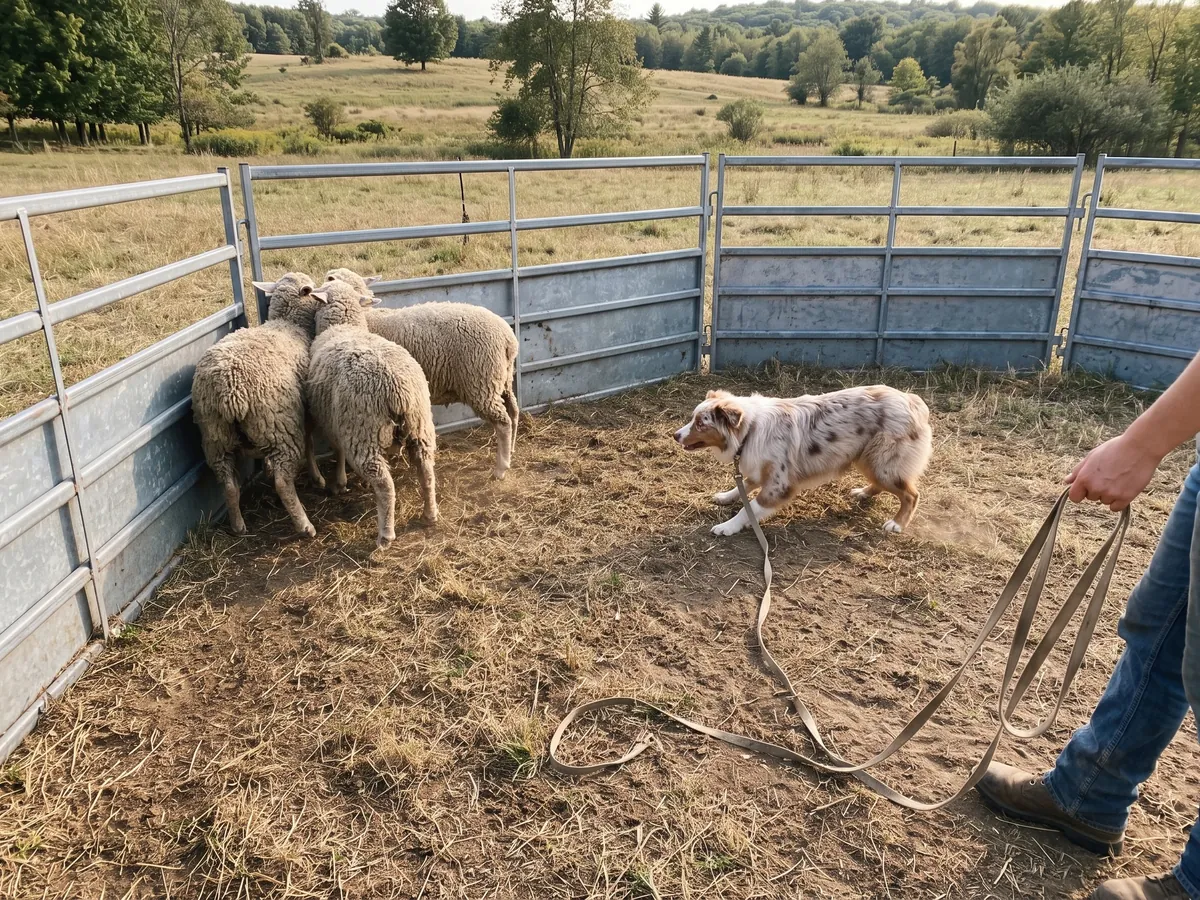
Your Herding Dog Was Built for This
You picked a smart, athletic breed, maybe because you loved its energy. Then the nipping started, the chasing got scary and the evenings turned into a dog staring at you, waiting for a job. Longer walks and more fetch somehow made it worse.
That isn’t a failure on your part. Herding and working breeds were bred to do a job all day, and without one they invent their own, like rounding up the kids, policing the other dog or chasing every car. Herding training gives that instinct the job it was made for.
Most owners notice the change at home first. A dog who has done real work settles in the evening, and the instinct that used to go into your kids’ heels now has rules and a place to go.
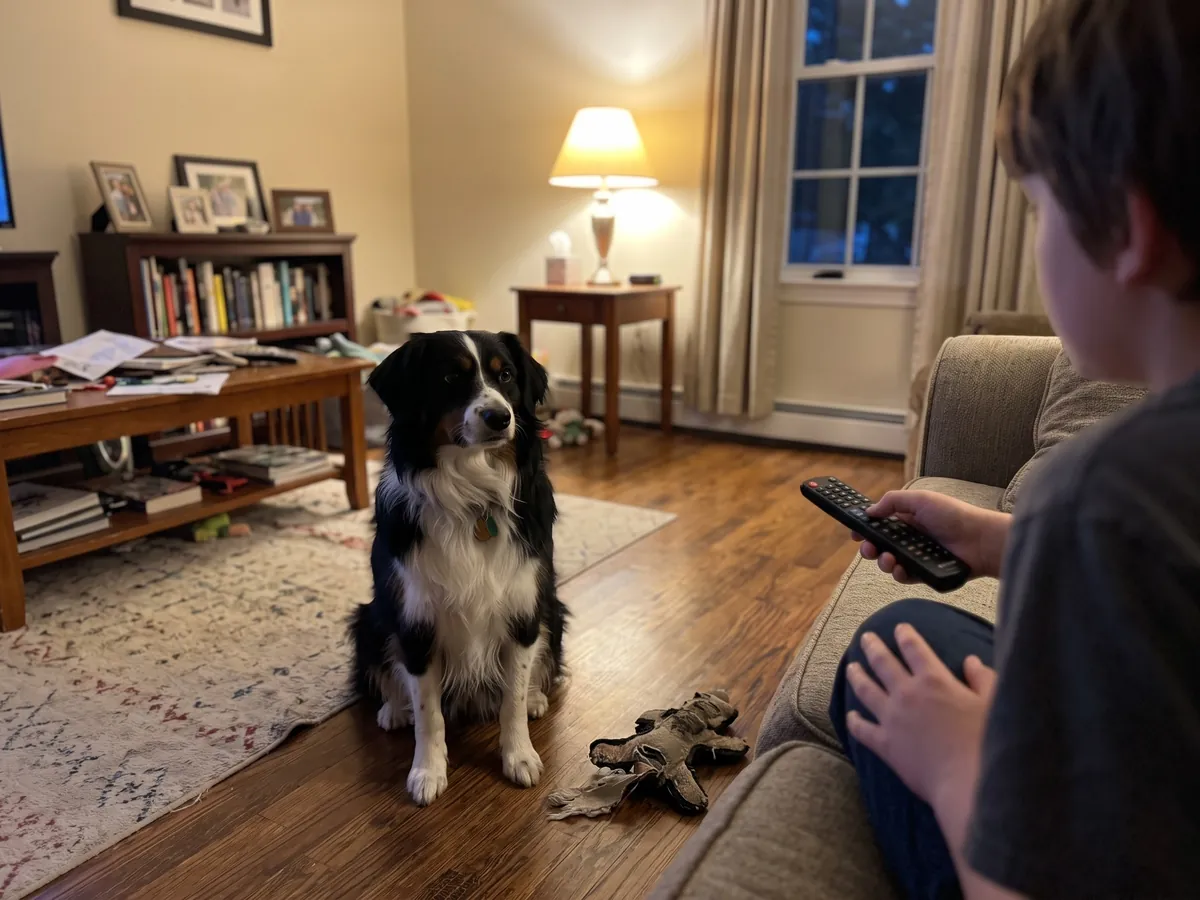
Herding Training Around Your Animals
Herding is about the welfare of the stock as much as the skill of the dog. A dog who dives in, grips or chases can injure an animal, scatter a flock or get kicked. That’s why every dog starts slowly, on a long line, with calm animals, and only gets more freedom as its control grows.
If you keep horses, goats, sheep or chickens at home, the same training carries over to your own property. Your dog learns to stay out from under hooves, wait at the gate and come off the animals the moment you ask, and the last step happens on your land with you handling.
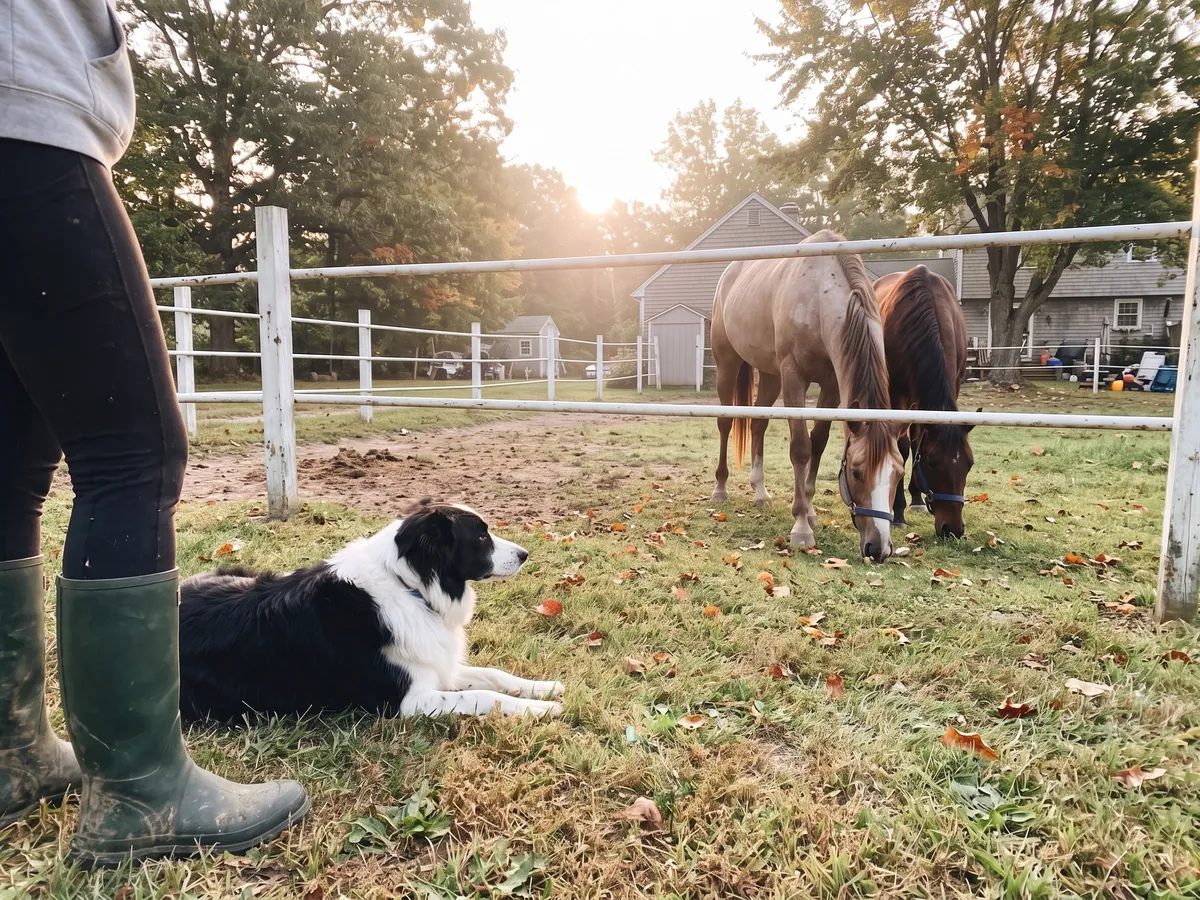
Herding Breeds and Their Styles
Herding breeds were bred for different jobs, and it shows in how they work. Border Collies gather with strong eye, staring and stalking the stock into place. Australian Shepherds work closer and more upright. Corgis, heelers and cattle dogs drive from behind, nipping low at heels. German Shepherds and other tending breeds patrol a boundary to keep the flock in one area.
Bobby trains the dog in front of him, so the plan follows your dog’s natural style instead of forcing it into another breed’s. Herding mixes and other working breeds with real instinct are welcome too.
- Border Collies and Australian Shepherds
- Cattle dogs, heelers and Corgis
- German Shepherds and other shepherd breeds
- Shelties, Collies and Belgian breeds
- Mixes with plenty of herding in them
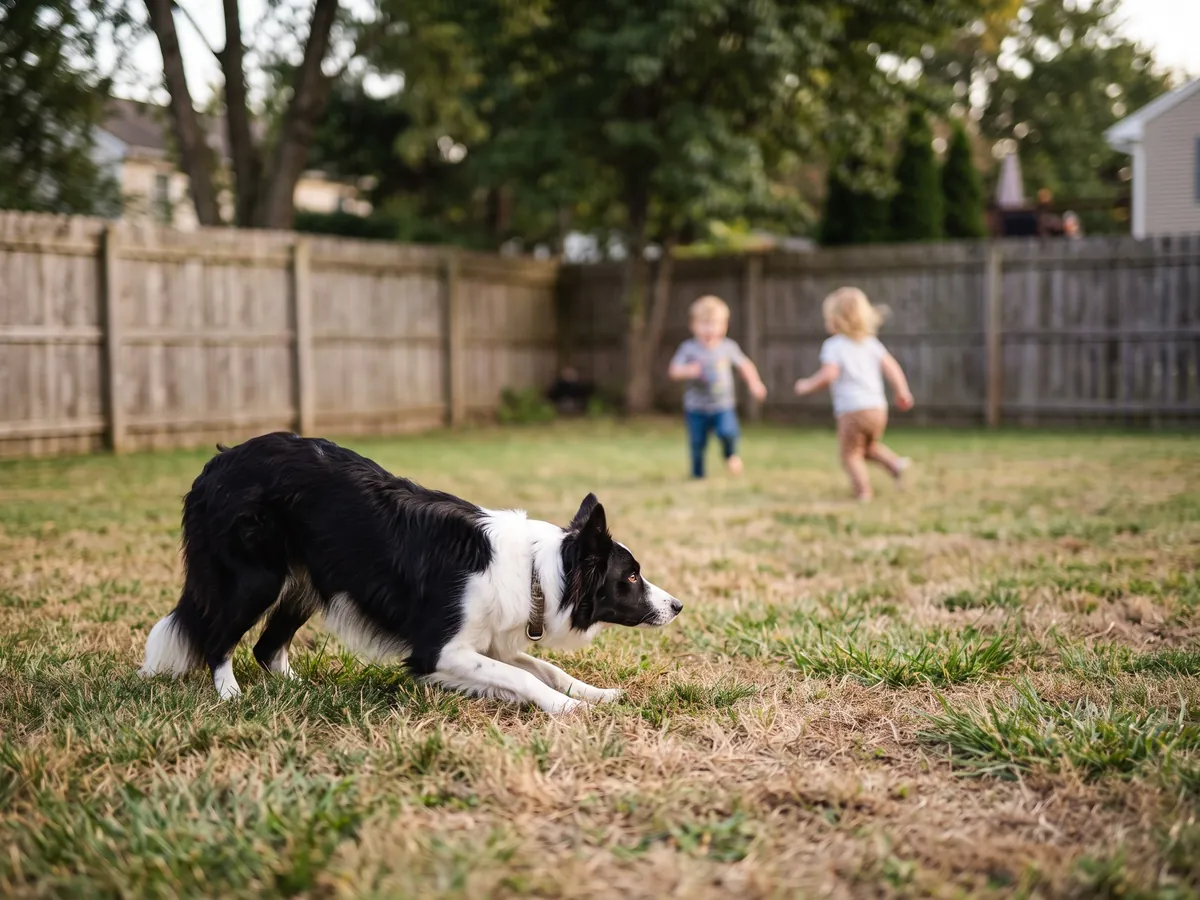
Signs Your Dog Needs a Herding Outlet
If several of these sound like your dog, the instinct is looking for a job. Herding training gives it one.
If this sounds like your dog, you’re in the right place. Bobby has helped hundreds of dogs with problems just like these. Click the button below and fill out a quick form to get started with a free consultation.
Herding Dog Training Questions
Do you train herding on real livestock?
Yes. Herding can only be learned on stock, so your dog works with calm, dog-broke animals in a controlled setting, starting on a long line and building up as its control grows.
Does my dog need herding instinct to start?
Most herding breeds have some, but the amount varies, and you can’t tell until your dog meets livestock. The first session is an instinct check, and Bobby tells you honestly what he sees and what is realistic for your dog.
What breeds can do herding training with you?
Any herding breed, including Border Collies, Australian Shepherds, Corgis, cattle dogs, German Shepherds and Shelties, plus mixes and other working breeds with real instinct.
How old should my dog be to start herding?
Most dogs are ready for livestock at around six months to a year old. Younger puppies start with Puppy Foundations, a reliable stop, a recall and rules on chasing, so they’re ready when the time comes.
Can you get my dog ready for an instinct test or herding trial?
Bobby builds the foundation that tests and trials are built on, a reliable stop, balanced flanks and calm control on stock. Tests and trials themselves are run by clubs and organizations such as the AKC, and Bobby will tell you honestly how close your dog is.
Will herding training make my dog more nippy at home?
Usually the opposite. Herding comes with rules about when the dog works and when it stops, and a dog with a real outlet for its drive tends to settle better at home.
How much do you charge for herding dog training?
It depends on your dog, its instinct and what you want to do with it, from a calmer family dog to work on your own livestock or trials. Each program is built for one dog, so there’s no flat fee. At the free consultation, Bobby gets the full picture of your dog, builds a custom training plan around your goals and gives you an exact quote, with no pressure to sign up.
Do you pick up herding dogs from anywhere in RI?
Yes. For board and train, Bobby picks your dog up from your home and brings it back at the end, anywhere in Rhode Island and southern Massachusetts, from Warwick, Exeter and West Greenwich to Portsmouth, Tiverton and the Attleboro area.
Explore Other Programs
Board & Train
Your dog lives and trains with Bobby and comes home obedient, reliable and calm, with pickup and a final session at your house.
Reactive Dog Training
Barking and lunging at dogs, people, cars or bikes? Calm first, then relaxed walks on your own street.
Puppy Training
House rules, routines and real-world manners from the first weeks, for a well-mannered puppy who listens and is easy to live with.
Get Started Today
Book your free consultation for herding dog training in Rhode Island. Tell Bobby about your dog’s instinct and your goals, from a calmer dog to working stock, and get a custom training plan built around your dog.